

COMING OUT IN FEBRUARY 2026. AVAILABLE FOR PRE-ORDER:
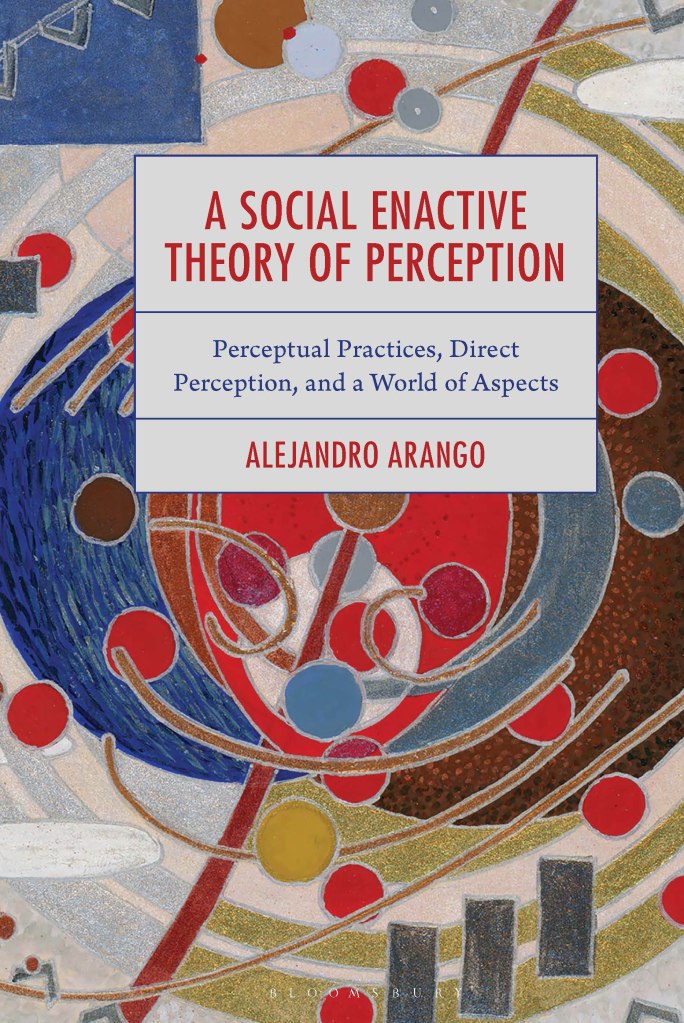
A Social Enactive Theory of Perception offers a unified study, in the enactivist tradition, of perception and its connection to sociality. Alejandro Arango looks for perception in the middle of everyday life and finds that perception is at home in perceptual practices, socially structured ways of relating to the perceptible world. These practices are attuned to different dimensions of human life, such as the cultural worlds of customs that play a role in our lives’ unique character, aesthetic experience, interpersonal relations, and even social interactions that can be labeled welcoming and accepting, or racist and xenophobic. The book argues that although the perceiver is situated in relation to the world in many ways that influence perception, this does not entail a radical subjectivism. Rather, it shows that the world appears to perceivers in different ways or aspects since we relate differently to the same world The framework of perceptual practices can also be applied to our understanding of others, and the book argues that we understand others in part through perception. This framework allows us to understand others as bearers or social identities.
Bringing social philosophy together with philosophy of mind and taking the next step in enactivist philosophy, this theory accounts for the fundamental role of perception in the social aspect of everyday experience. With influences from Wittgensteinian pragmatism, phenomenology, and analytic philosophy of perception, as well as engagement with social psychology, social cognition studies, and work in neuroscience, the book synthesizes different layers at work in perception, paying important attention to the non-visual senses.
RECENT PUBLICATIONS
- March 2025. Resting Content: Unclarity in Everyday Perception (with C. Cusick). Phenomenology and the Cognitive Sciences. https://doi.org/10.1007/s11097-025-10065-8 Phenomenology and the Cognitive Sciences.
- Fall 2024. No Latinx Without Afro-Latinx: A Desideratum for Accounts of Latinidad (with A. Burgos) APA Studies on Hispanic/Latino Issues in Philosophy 24 (1): 11-19. Access here.
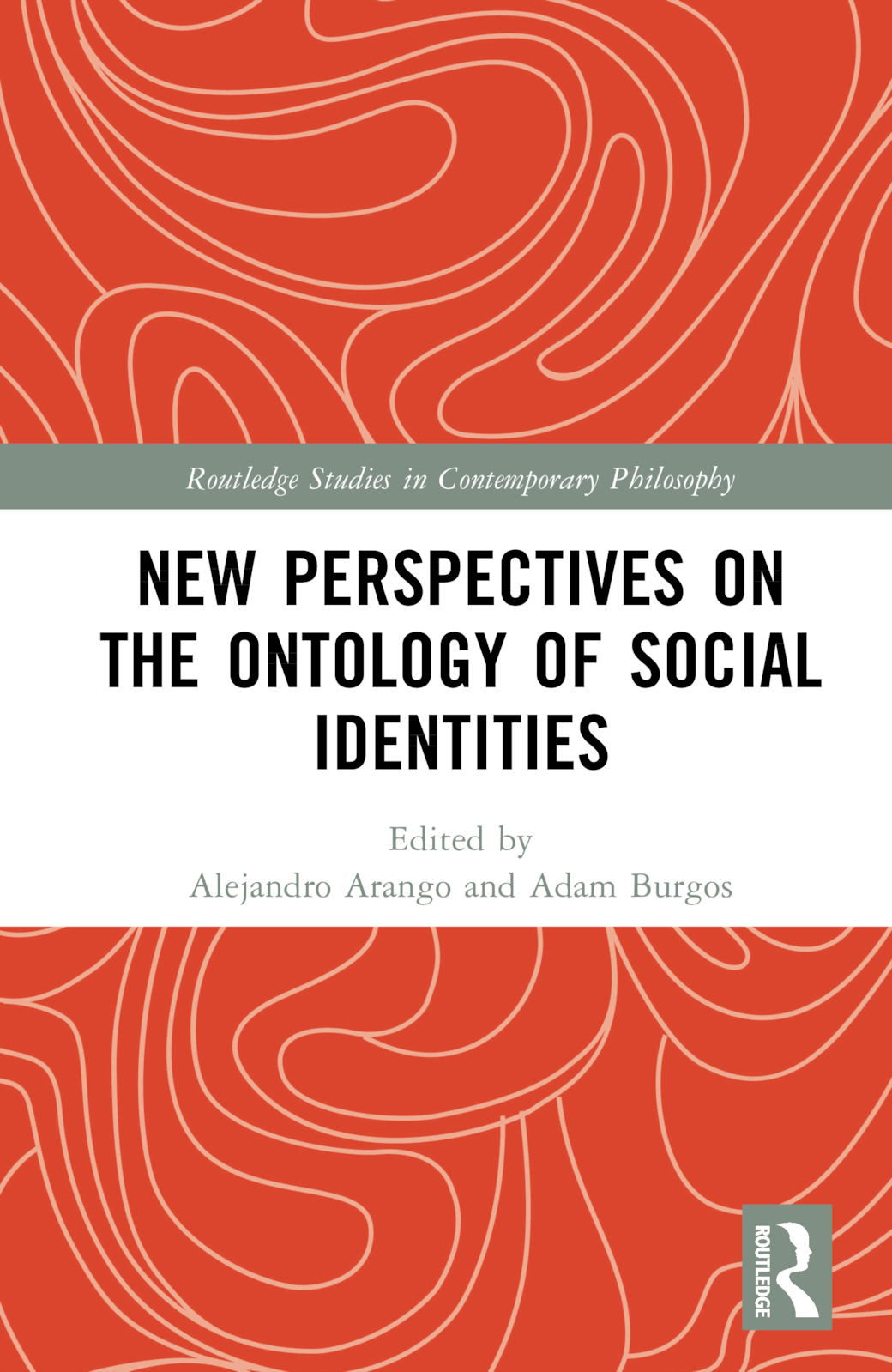
- June 2024 New Perspectives on the Ontology of Social Identities, foreword by Linda Martín Alcoff, co-edited with A. Burgos. Routledge Studies in Contemporary Philosophy.
- June 2024 The Social Identity Affordance View: A Theory of Social Identities. (with A. Burgos). Southern Journal of Philosophy.
- 2023 Ignorance and Cultural Diversity: The Ethical Obligations of the Behavior Analyst. (with N. Lustig). Behavior Analysis in Practice 16 (1): 23–39.
- 2022 Neither Race nor Ethnicity: Latinidad as a Social Affordance. (with A. Burgos)
Journal of Social Philosophy.
About my interests and work in philosophy
Three lines of inquiry converge in my research: social philosophy (esp. social epistemology and social ontology), Latin American and Latinx philosophy, and philosophy of perception. I keep an active interest in Husserlian and contemporary phenomenology. My research is supported by a broad and solid formation in the history of philosophy. My research and teaching often engage with value questions in ethics, applied ethics, and sociopolitical issues.
My philosophical work is in social philosophy, intersecting thematic research in social epistemology and social ontology (with a focus on social identities), Latin American and Latinx philosophy, and philosophy of perception. The intersection between perception and social epistemology can be seen as a guiding thread in my work, which it’s also served as an entry point to questions about social identities and, in particular, about the social identity Latinidad(es).
My under-contract book, A Social Theory of Perception: From Action to Practices, is devoted to exploring and understanding how our perceptual mode of knowing is embedded in our living with others and our knowing others, and in what aspects of our living with others and knowing others are the way they are because of this perceptual basis. In this moment, I am particularly interested in the perceptual basis of social identities, and in both the epistemological implications of such perceptual basis for our living with others, as well as the ontological implications for the very notion of a social identity.
My current work in Latin American and Latinx philosophy has two main targets. One of them concerns the question of the identity of Latinx folks in the United States. From this project an article was published recently in the Journal of Social Philosophy, and a monograph project is currently under peer-review at Columbia University Press. In this work, a collaborative project, we explore how the embodied, pragmatically situated social identity of Latinx folks in the U.S. should be understood, since the categories of race and ethnicity, we argue, are insufficient to do this job. This work elaborates and applies some of my own work in the perception of social identities to the case of Latinx folks in the US. We contend that a social reality as fluid and contextual as this social identity requires some conceptual resources that are not found in the race and ethnicity framework. Other aspects currently at work include, for instance, the questions that Afro- and Black Latinx folks present to the idea of Latinidad, and in relation to a critical genealogy of such concept.
* * *
In perception, I have written on (and continue to explore) the idea that human perception is a type of socially constituted, direct interaction with the world. I am currently working in the role of context and background in perception and in the epistemological importance of the essentially perspectival nature of perception.
My current interests in social epistemology are about how sensory perception is at the basis of our interactions with others, and how this role helps us understand social relations based on visible identities, and contributes to understand the responsibilities we have towards each other. At the moment, I am working on the question of whether the perception of biological motion entails perception of minimal forms of intentionality and agency.
I believe that students of philosophy can learn valuable lessons from philosophy classes, whether they are philosophy majors or not. I study and reflect on philosophy and pedagogy, and write on these topics as well.
In the digital story What We See, right below, I remember and reconstruct some of the motivations that got me thinking about perception and sociality.

Like trees we grow – it’s hard to understand, like all life! – not in one place, but everywhere; not in one direction, but upwards and outwards and inwards and downwards equally; our energy drives trunk, branches, and roots all at once. — Nietzsche, The Gay Science
Nietzsche, The Gay Science
 Alejandro Arango, Ph.D.